- Home
- Coffee Blog
Espresso Machine Repair in Charlotte: 5 Quick Fixes
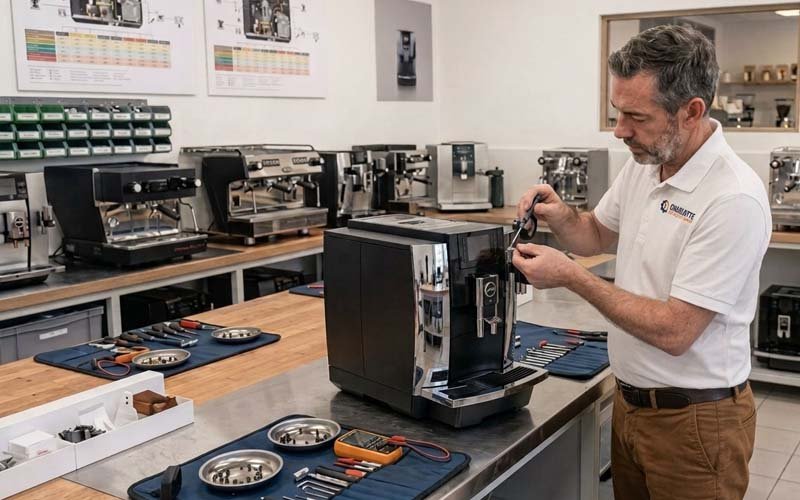
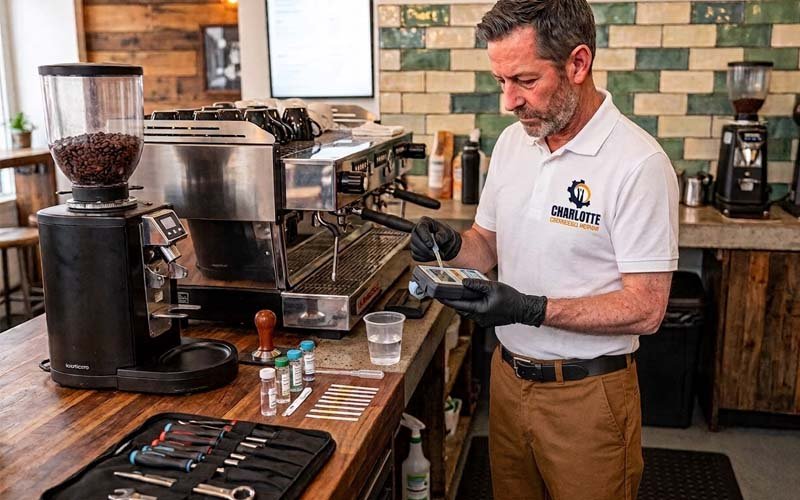
Nothing halts a busy Charlotte morning faster than a malfunctioning commercial espresso machine or a dead prosumer home setup. When a machine fails during the morning rush at a café in South End or NoDa, or when your home setup refuses to pull a shot, every minute of downtime matters.
While complex electrical and hydraulic issues require specialized, factory-certified technician diagnostic support, some common coffee problems stem from simple issues you can resolve immediately.
This comprehensive troubleshooting guide highlights the 5 most common espresso machine faults, their immediate quick fixes, and the specific thresholds where you need to call a professional technician.

1. Zero Pressure or No Water Flow
The Symptom
You flip the brewing switch or engage the group head lever, but absolutely nothing happens. The pump might hum quietly, or there might be complete silence as no water emerges from the screen.
The Quick Fix
- Check the Water Supply: If you operate a commercial machine plumbing line, verify that your main water inlet valve is fully open. For a residential tank machine (such as a Rocket Appartamento), make sure the reservoir is completely seated on its weight sensors.
- Inspect for Vapor Lock: If a reservoir machine runs completely dry, air can get trapped in the pump lines. Prime the system by forcing water through the steam wand or using a syringe to push water directly into the intake line.
- Clear the Group Head Screen: Fine coffee oils and sediment can completely blind a shower screen. Remove the screen with a short screwdriver and scrub it clean.
When to Call a Professional Tech
If your water lines are open and the reservoir is full, but your pump makes a loud, vibrating racket or no sound at all, you are likely dealing with a burnt-out rotary or vibratory pump motor, a failed solenoid valve, or a malfunctioning control board. These components handle high voltage and pressurized water, requiring professional diagnostics.
2. Leaking From the Portafilter (Group Head Blowouts)
The Symptom
As your pump builds brewing pressure up to 9 bars, water starts spraying or dripping out from around the sides of the portafilter ear attachments instead of flowing cleanly through the basket spouts.
The Quick Fix
- Clean the Group Gasket: Ground coffee often gets stuck on the rubber ring inside the group head. Use a specialized group brush to scrub away built-up grit, then wipe down the portafilter ears.
- Check for Overdosing: If you overfill your filter basket with too many grams of coffee, the dry puck will physically push against the shower screen, preventing the portafilter from locking fully into place. Reduce your dose and try again.
When to Call a Professional Tech
Rubber gaskets naturally harden, crack, and lose elasticity over time due to constant exposure to high temperatures. If cleaning the rim does not fix the leak, the group gasket must be pried out and replaced with a fresh OEM rubber or silicone ring. This is typically done during a routine preventative maintenance check.
3. The Machine Won’t Heat Up (Cold Water Only)
The Symptom
Your espresso machine turns on and the indicator lights illuminate, but the boiler pressure gauge stays at zero and the water coming out of the group head is completely cold.
The Quick Fix
- Reset the Eco-Mode or Smart Features: Many modern super-automatic espresso systems (like a Jura E8) or digital prosumer setups have strict auto-off timers. Power down the main switch completely, unplug the cord for 60 seconds, and restart the system.
- Verify Power Source Requirements: Commercial multi-group powerhouses require dedicated 220V circuitry. If a machine is plugged into an overloaded circuit, it may pull enough power for the electronics but trip internal safety mechanisms before running the heavy heating element.
When to Call a Professional Tech
If your power cycle yields no results, the issue is likely a tripped safety hi-limit thermostat, a burned-out heating element, or a scale-coated heating probe that can no longer sense temperature accurately. Replacing elements requires draining the boiler completely and testing for electrical resistance using a multimeter.
4. Sour, Bitter, or Inconsistent Extractions
The Symptom
Your coffee tastes wildly sour one minute, extremely bitter the next, or your extraction times vary drastically between identical shots.
The Quick Fix
- Purge and Clean Your Grinder: Built-up coffee oils oxidize and turn rancid inside your grinding chamber. Run a dedicated grinder cleaning tablet through the chute, vacuum out old chaff, and ensure you use fresh beans.
- Dial-In Your Grind Size: Changes in local weather and humidity affect how coffee beans interact with your equipment. If your shot pours out in under 15 seconds, your grind is too coarse; if it drips out painfully slow, your grind is too fine. Adjust your collar in small increments.
When to Call a Professional Tech
If your grind sizes continue to drift randomly, your grinder burrs may be dull, chipped, or misaligned. Commercial burrs generally require precision mechanical realignment or complete physical replacement after processing a specific volume of coffee beans to maintain a uniform extraction profile.
5. Weak, Spluttering Steam Pressure
The Symptom
Your steam wand lacks the velocity needed to roll milk for lattes. It splutters water, drops pressure immediately when opened, or creates a weak hiss instead of a powerful jet.
The Quick Fix
- Unclog the Steam Tip Nozzles: Milk residue dries rapidly inside steam wand tips, sealing the tiny holes shut. Take a paperclip or a specialized steam tip needle and clear out any crusty debris from each opening.
- Purge Regularly: Always purge your steam wand before and after texturing milk to clear out residual condensation and prevent milk from being vacuumed back up into the wand.
When to Call a Professional Tech
If your steam tips are perfectly clear but you still experience severe pressure drops, you could have a malfunctioning vacuum breaker valve, a failed pressure stat, or severe scale accumulation inside the steam boiler itself.
The Charlotte Hard Water Crisis: Protecting Your Machinery
The single biggest threat to espresso equipment in the Charlotte metro area is local water composition. Mineral content can lead to severe scale accumulation inside boilers, copper pipes, and solenoid valves.
[Hard Water Minerals] ---> [Boiler Heating Tiers] ---> [Scale Formations] ---> [Flow Blocks & Failure]
Over time, scale acts as an insulator on heating elements, causing them to work harder, burn out prematurely, and cause irregular flavor extractions.
To prevent these issues, both commercial establishments and home baristas should utilize an under-counter water filtration system (such as an Everpure system) to balance mineral content, protect internal components, and ensure consistent flavor.
Quick Reference: Brand-Specific Professional Assistance
If basic troubleshooting does not fix your issue, ensure you work with a service provider experienced with your specific equipment brand:
- Commercial Line Powerhouses: Look for factory-certified technicians if you run La Marzocco, Nuova Simonelli, Slayer, Sanremo, or Wega platforms.
- Prosumer & Manual E61 Systems: Ensure your technician uses authentic OEM parts for brands like Rocket Espresso, ECM, Profitec, Lelit, or Quick Mill.
- Super-Automatic Settings: Automatic bean-to-cup platforms like Jura systems require specialized bench tools and diagnostics to properly clear internal errors and component clogs.
Expert Coffee Infrastructure Maintenance
Don’t let unexpected equipment downtime impact your morning routine or daily business revenue. Whether you need an emergency diagnostic check for a commercial setup or convenient pickup and return delivery service for a premium home espresso system, professional care keeps your equipment properly calibrated.
For certified diagnostic support, preventative maintenance plans, and factory-authorized parts backed by a 30-day labor guarantee, reach out to the team at Charlotte Espresso Repair at (980) 322-2157 or visit the shop at 3609 Scott Futrell Drive, Charlotte, NC 28208.
Categories
- Espresso Machines
- Coffee Grinders
- Coffee Brewers
- Barista Tools